By Alex Schlepp | Last updated October 15, 2026
Few teams in Major League Baseball have a history as rich as the Los Angeles Dodgers. From their first championship win in Brooklyn in 1955 to their modern-day accomplishments as nine-time World Series champions, the L.A. Dodgers’ championship journey is one of perseverance, resilience, and triumph.
Table of Contents
Dodgers World Series History at a Glance
Here is Dodgers World Series history at a glance: nine championships, one in Brooklyn and eight in Los Angeles, with the opponent, series result and World Series MVP for each. For the full franchise timeline, visit the Dodgers’ history page at MLB.com.
| Year | Opponent | Series | World Series MVP |
|---|---|---|---|
| 1955 | New York Yankees | 4-3 | Johnny Podres |
| 1959 | Chicago White Sox | 4-2 | Larry Sherry |
| 1963 | New York Yankees | 4-0 | Sandy Koufax |
| 1965 | Minnesota Twins | 4-3 | Sandy Koufax |
| 1981 | New York Yankees | 4-2 | Ron Cey, Pedro Guerrero, Steve Yeager |
| 1988 | Oakland Athletics | 4-1 | Orel Hershiser |
| 2020 | Tampa Bay Rays | 4-2 | Corey Seager |
| 2024 | New York Yankees | 4-1 | Freddie Freeman |
| 2025 | Toronto Blue Jays | 4-3 | Yoshinobu Yamamoto |
The Early Days in Brooklyn
The 1940s and early 1950s could only be described as heartbreak after heartbreak. The then-Brooklyn Dodgers made five World Series appearances between 1941 and 1953, losing all five to their crosstown rivals, the New York Yankees.
The Dodgers finally got their time to shine when they beat the Yankees 2-0 in Game 7 of the 1955 World Series. The Dodgers, led by manager Walter Alston, became the first team in history to win a seven-game World Series after losing their first two games.
A left-handed pitcher named Johnny Podres was the star of Game 7. The 23-year-old Podres threw a complete game shutout against the Yankees, earning himself the World Series MVP. Another star of Game 7 would be the Dodgers’ left fielder Sandy Amorós, who made a game-saving catch down the left-field line and fired it to Pee Wee Reese, whose relay to Gil Hodges completed a double play.
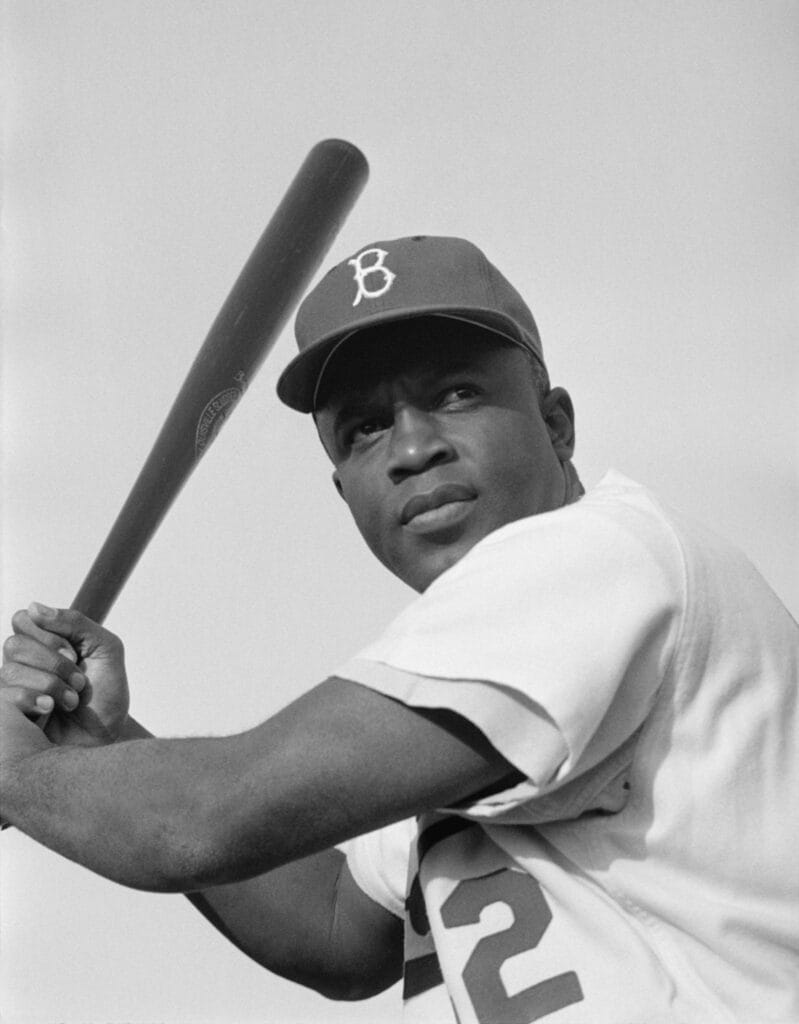
This would be the one and only time the Dodgers would win a World Series championship while in Brooklyn, as the Yankees and Dodgers met once again in 1956, with the Yankees winning again in seven games. After the 1956 season, the Dodgers’ barrier-breaking second baseman Jackie Robinson would retire. The 1955 championship remains his only World Series win.
The Relocation to Los Angeles
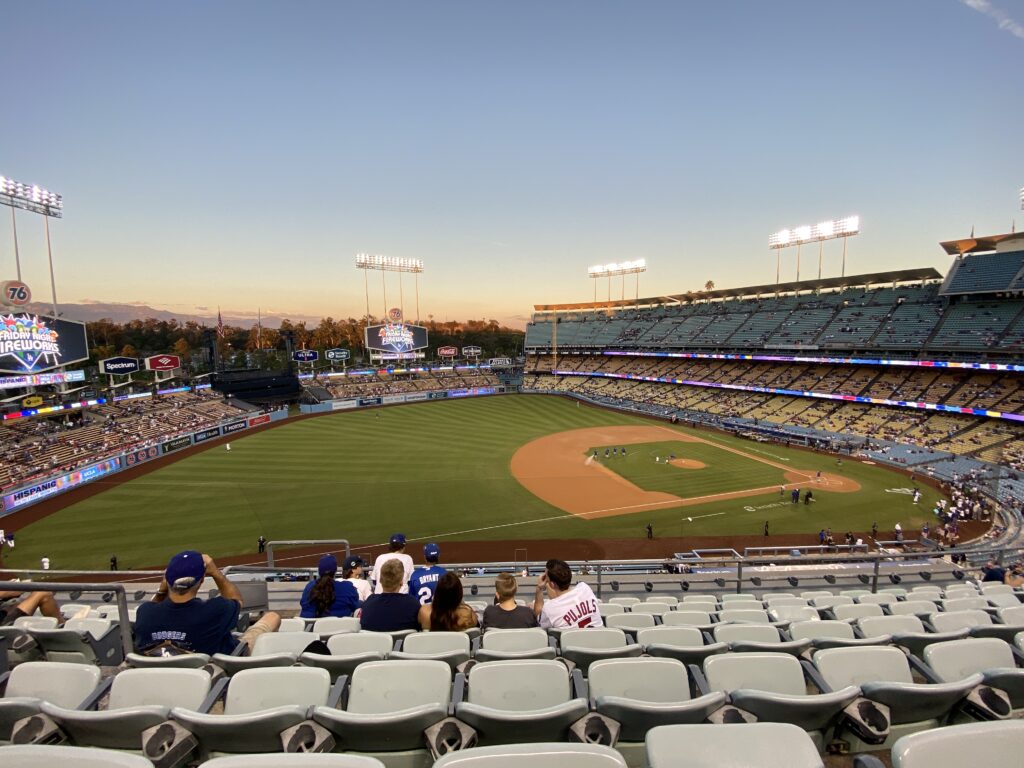
After the Dodgers relocated to Los Angeles in 1958, they played in the Los Angeles Memorial Coliseum until 1962, when they moved into their brand-new Dodger Stadium.
It would be at the Coliseum in 1959 where the new Los Angeles Dodgers earned their second World Series title in six games over the Chicago White Sox. After losing Game 1 to Chicago 11-0, the Dodgers would fire back by winning four of the next five games.
The people of Los Angeles came out to support their newly founded hometown team, and in Game 5 a World Series record crowd of 92,706 fans filled the Coliseum to give the Dodgers the extra boost they were looking for. The Dodgers’ reliever Larry Sherry went on to win the 1959 World Series MVP after recording two wins (Games 4 and 6) and two saves (Games 2 and 3), carrying a 0.71 ERA while allowing only one earned run.
The Sandy Koufax Era
Over the course of three years, the Dodgers were the best they had looked yet, claiming two World Series championships in 1963 and 1965. With victories over the New York Yankees and the Minnesota Twins, the Dodgers were on top of the world.
In 1963, the Dodgers had their most dominant World Series outing in their history. They swept the rival Yankees in four games. Sandy Koufax, the Dodgers’ starting pitcher, would earn his first World Series MVP after being credited with a 1.50 ERA, allowing only three runs in two complete-game starts while tallying 23 strikeouts in 18.0 innings. Another standout came from Don Drysdale, another Dodgers’ starter, who threw a complete-game shutout in Game 3 with nine strikeouts. Among the Yankees hitters Drysdale faced was Yogi Berra, who pinch-hit in what would be Berra’s last-ever World Series plate appearance.
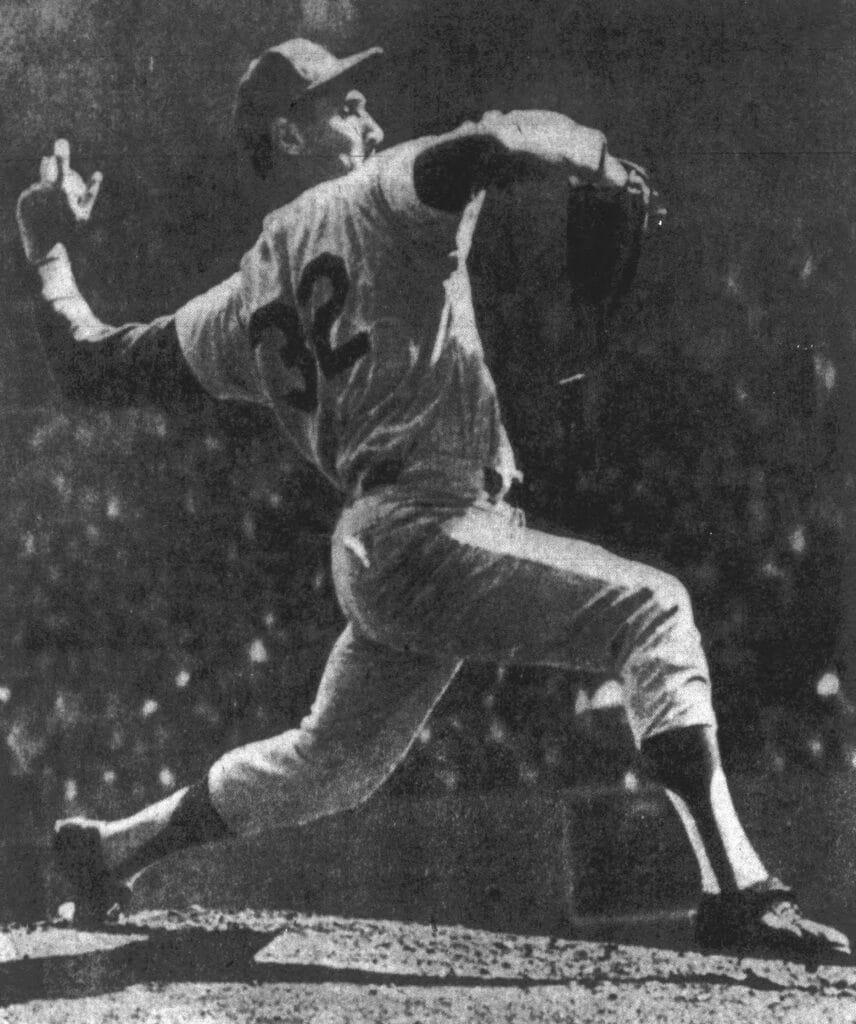
Two years later in 1965, the Dodgers faced off against the Minnesota Twins in the Twins’ first World Series appearance since moving from Washington. Unlike the Yankees in ’63, the Twins were able to take the series to seven games, with Game 7 taking place in Minnesota. Despite the home-field advantage, the Twins had to face off against 1963 World Series MVP, Sandy Koufax. The Dodgers’ ace went on to record a complete game shutout in Game 7, allowing only three hits while tallying 10 strikeouts. After this performance, Koufax earned his second World Series MVP, becoming the first person in Major League Baseball history to become a two-time World Series MVP.
The Eighties
After earning their two titles in the 1960s, Dodger fans would have to wait sixteen years to see their team bring home another World Series title.
In the 1977 and 1978 World Series, the Dodgers faced off against the New York Yankees, and would lose both years in six games, 4-2.
Los Angeles would later get their revenge on the Yankees in the 1981 World Series. After losing Game 1 and Game 2 against New York, the Dodgers steamrolled their way to victory by winning four straight games. Fernando Valenzuela, the Dodgers’ starter for Game 3, led the charge that day. Valenzuela went on to pitch a complete game where he recorded a 4.00 ERA, with 6 strikeouts. The Dodgers’ rookie was credited with the win in Game 3 and gave the team the boost they needed to beat the Yankees in the series.
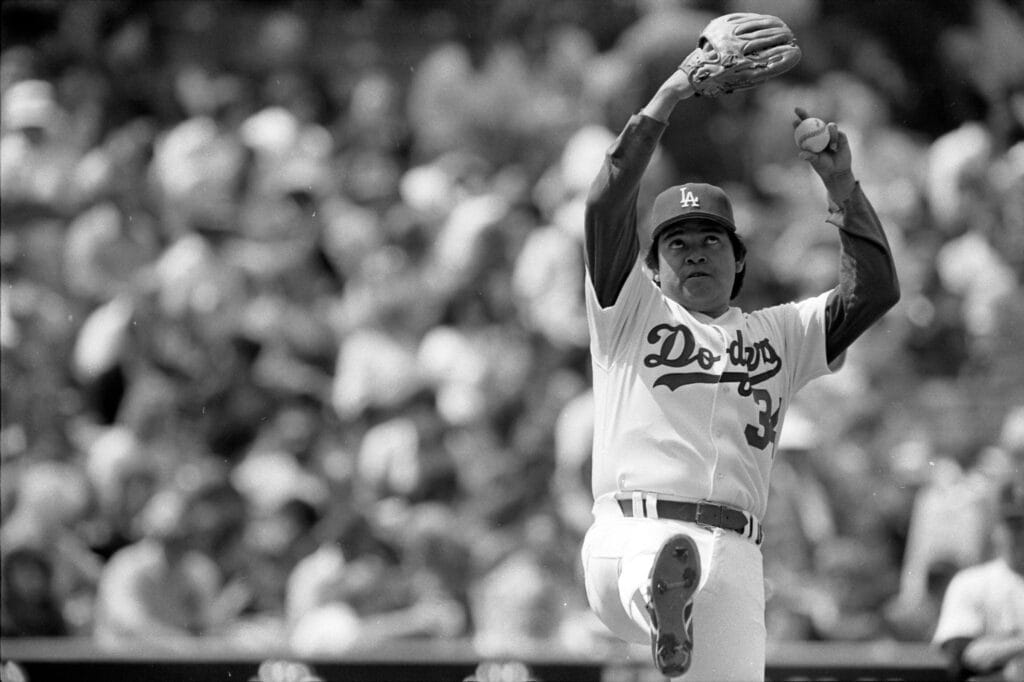
After stellar performances by Ron Cey, Pedro Guerrero, and Steve Yeager, the voting committee couldn’t decide who to give the MVP to, as all three players made distinct contributions to win the Dodgers the title. For the first time in MLB history, the 1981 World Series MVP was shared among the three men.
In 1988, the Oakland Athletics came to town to face off against the Dodgers in that year’s World Series. In Game 1, the Athletics had the upper hand for most of the game, going into the bottom of the 9th inning leading 4-3. With two outs and Mike Davis on first base, Kirk Gibson came in to pinch hit. Gibson, who was injured and not in the game’s lineup, was able to convince manager Tommy Lasorda to let him come in to hit.
Gibson took Athletics’ closer Dennis Eckersley to a full count. Eckersley threw a backdoor slider, hoping to sit Gibson down and win the game, but Gibson crushed the pitch over the right-field fence for a 5-4 walk-off win.
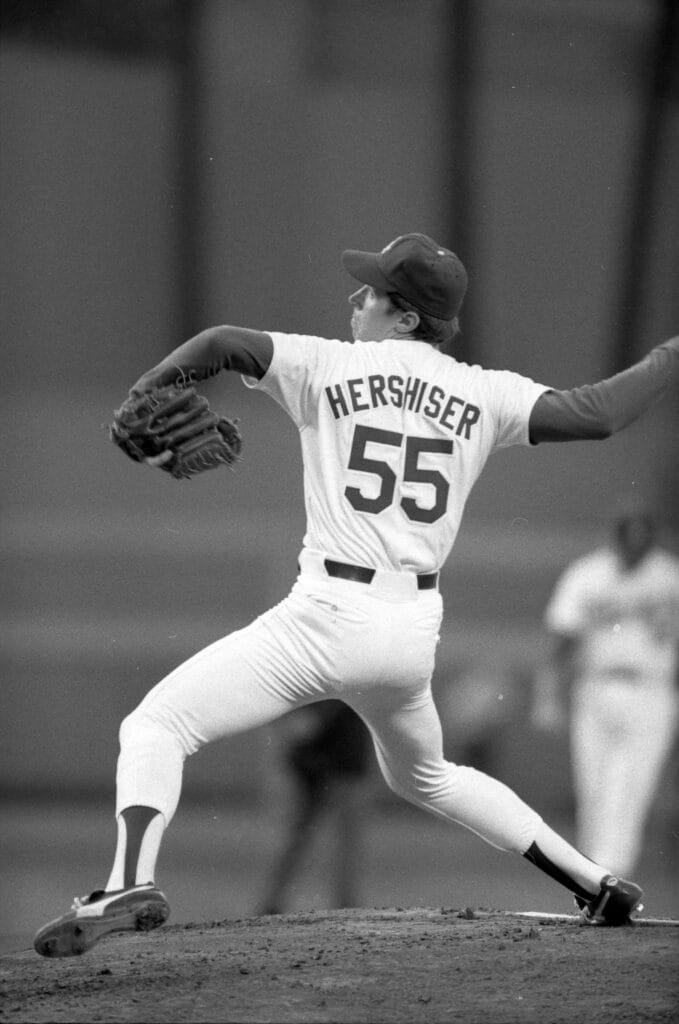
The Dodgers would go on to win the 1988 World Series against the Athletics 4-1, with the help of two historic performances in Games 2 and 5 coming from the arm of Dodgers’ starter Orel Hershiser. Hershiser pitched two complete games, posting a 1.00 ERA. He struck out 17 hitters over the course of his 18 innings after setting the Major League record with 59 consecutive scoreless innings earlier that season. He was later named the World Series MVP.
The Drought, the Pandemic, and the Return to Glory
After the electric 1988 World Series win, the Dodgers would have to wait a while before the Commissioner’s Trophy came back to Los Angeles. Dodgers fans waited 29 years to see their team back in the World Series. However, 2017 turned out not to be their year, as they lost to the Houston Astros in seven games. The 2018 World Series was not their year either, as they lost 4-1 to the Boston Red Sox.
In 2019, things looked up for the Dodgers. They had just broken their regular-season franchise record by going 106-56. However, L.A.’s playoff dreams were cut short in a 3-2 series loss to the Washington Nationals in the National League Division Series.
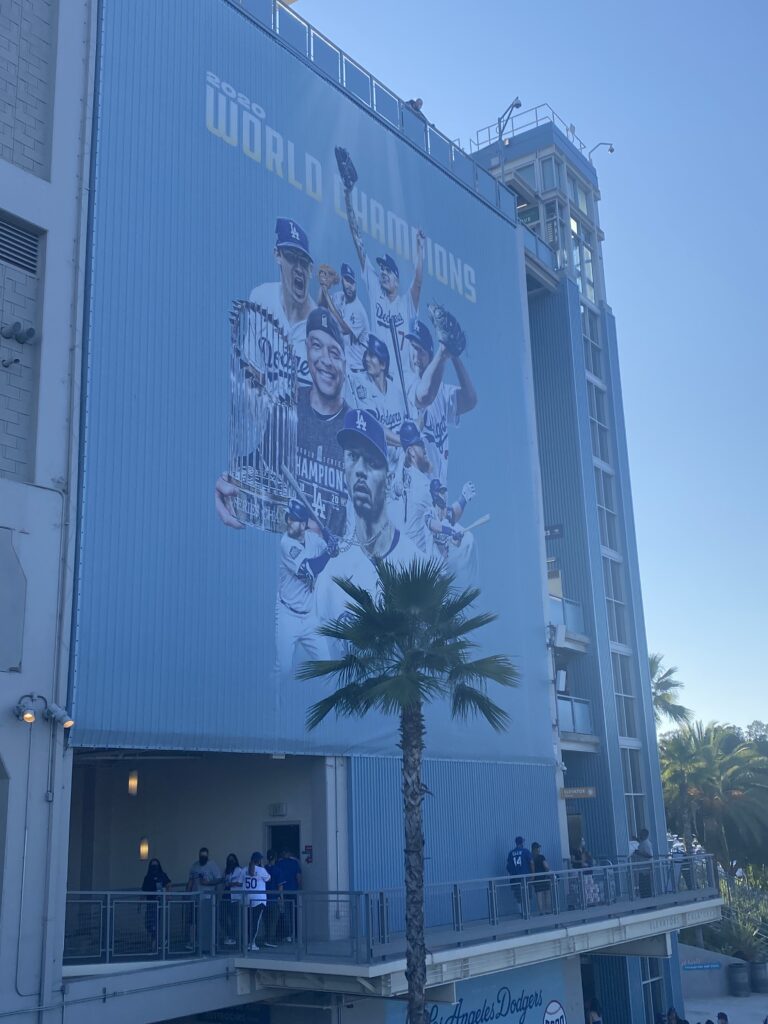
During the COVID-19 pandemic in 2020, many changes came to the league. The regular season schedule was shortened to 60 games, and the Dodgers finished 43-17, a 116-win pace over a full 162-game season.
In the 2020 World Series, the Dodgers faced off against the Tampa Bay Rays at Globe Life Field in Arlington, Texas. Future Hall of Famer Clayton Kershaw was up on the bump for Games 1 and 5 where he tallied 14 strikeouts over 11.2 innings with a 2.31 ERA to boot.
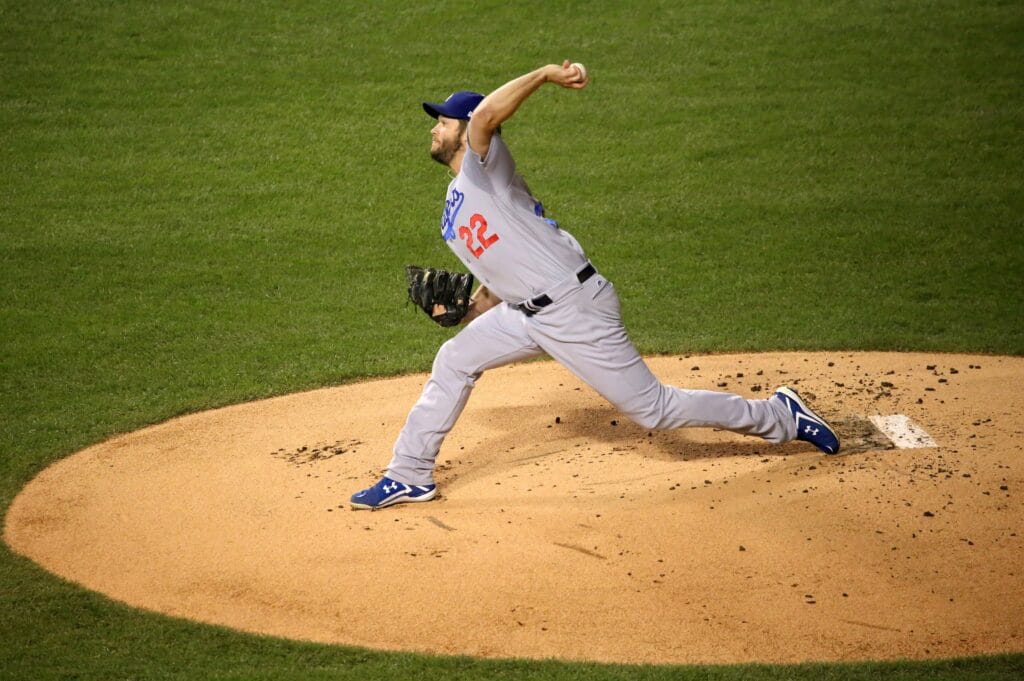
In addition to Kershaw’s lights-out pitching, Mookie Betts had a stellar performance during the series. Betts recorded a .269 batting average with 2 home runs and 4 stolen bases, while also providing incredible defense in the outfield.
The star of the show, however, was the Dodgers’ shortstop Corey Seager. Seager had a standout performance against the Rays where he had a .400 batting average during the series. He recorded 8 hits, 2 of which were home runs, along with 5 RBIs and 7 runs scored in six games, earning World Series MVP honors. The Dodgers would go on to beat the Tampa Bay Rays in six games, bringing the 32-year World Series drought to an end.
Modern-Day Dodgers Excellence
After the Dodgers ended their 32-year-long hunt for the World Series, it would be a few more years until they had another title to add to the collection.
In 2024, after beating the San Diego Padres and the New York Mets in the NLDS and NLCS respectively, the Boys in Blue made it back to the championship facing off against none other than the New York Yankees.
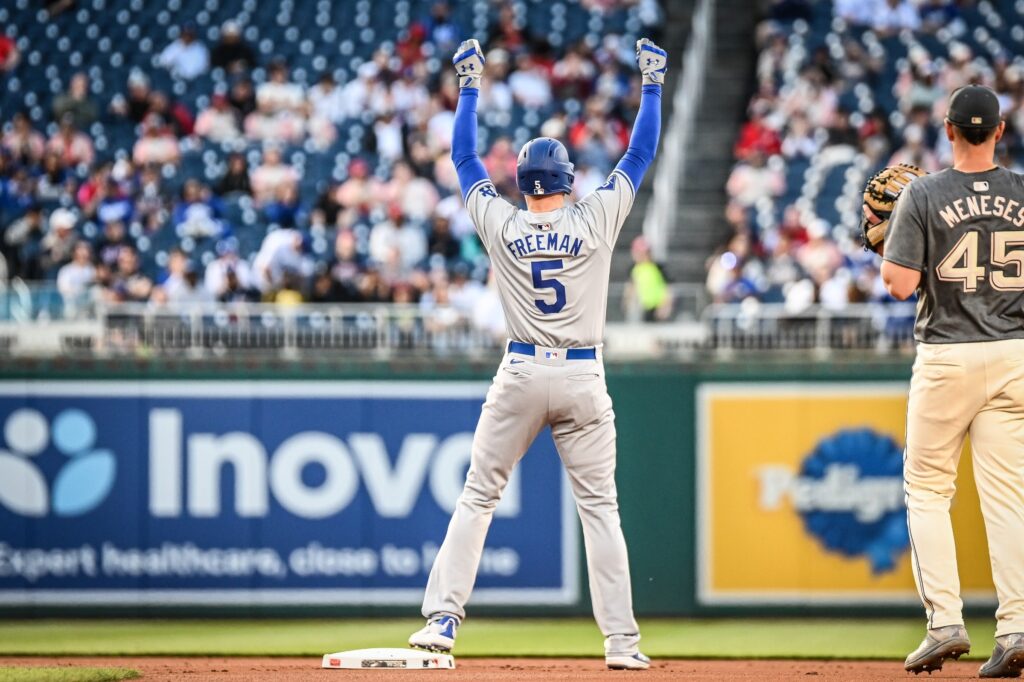
Game 1 of the championship was close as both teams traded blows, leaving the Yankees ahead 3-2 in the bottom of the 10th inning. That was until first baseman Freddie Freeman came up to bat. Facing Yankees’ left-hander Nestor Cortes, Freeman saw the first pitch and crushed it for a walk-off grand slam, the first in World Series history, winning Game 1 for the Dodgers.
“Steady Freddie” later went on to win the World Series MVP, tallying a .300 batting average with 6 hits and 4 home runs. The Dodgers’ newest pickup, the two-way star Shohei Ohtani, struggled during the series, hitting .105 with just 2 hits over the course of the championship. Despite a loss to the Yankees in Game 4, the Dodgers were able to come out on top in five games over their rival.
In the fall of 2025, Dodger fans found themselves cheering for their team in the championship again, this time against the Toronto Blue Jays. The Dodgers’ standout player this go-around was their not-so-secret weapon, Yoshinobu Yamamoto. Yamamoto made three appearances during the series, in Games 2, 6, and 7. In Game 7, he came in as a reliever on zero days’ rest and threw 2.2 scoreless innings, allowing 1 hit and 1 walk. Yamamoto went 3-0 across those appearances with a 1.02 ERA and 15 strikeouts against the Blue Jays, earning World Series MVP honors.
The true highlight of the 2025 World Series came off of the bat of Miguel Rojas and Will Smith in Game 7. In the top of the 9th inning with one out, Rojas faced off against Blue Jays pitcher Jeff Hoffman and hit a solo home run to tie the game, which sent it to extra innings.
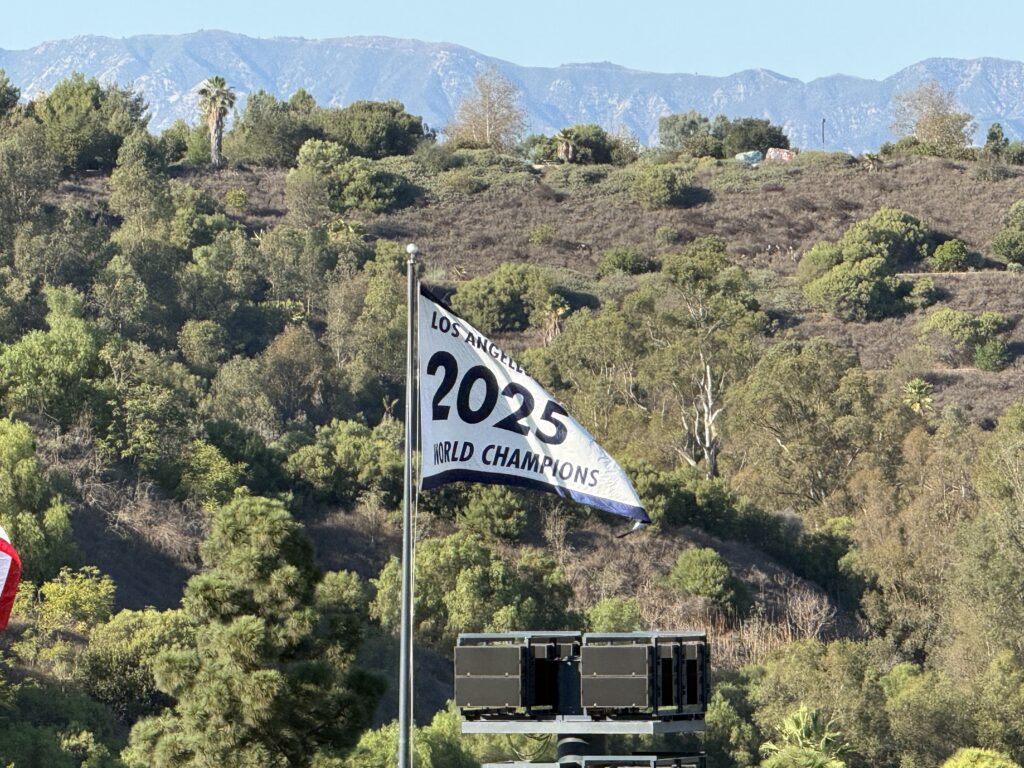
Late in Game 7, in the top of the 11th inning, Dodgers’ catcher Will Smith came up to bat against Toronto’s Shane Bieber. Up 2-0 in the count, Smith got a hold of Bieber’s slider and sent it over the wall for a decisive solo home run, giving the Dodgers their first lead of the night, a lead they would keep. In the bottom of the 11th, Alejandro Kirk hit a broken-bat ground ball up the middle, which Mookie Betts turned into a game-ending double play, giving the Dodgers their 9th World Series title.
2026 postseason: The Dodgers’ bid to become just the third franchise in MLB history to win three straight World Series titles ended in the 2026 NLCS, when the Milwaukee Brewers swept Los Angeles in four games. The Brewers clinched the series with a 6-4 win in Game 4 at Dodger Stadium on Oct. 15, 2026.
Follow the postseason with our Dodgers schedule and roster, and brush up on the numbers with our Baseball Statistics Handbook.
